When we talk about towel quality, most people immediately think about thickness, softness, or brand reputation. However, one of the most important factors that determines how a towel performs over time is the type of yarn used in its construction. The yarn directly influences absorbency, durability, texture, drying speed, and even the overall lifespan of the towel.
Understanding different towel yarn types is essential for manufacturers, trading companies, retailers, and even informed buyers who want to make better sourcing decisions. In this article, we explore the most common yarns used in towel production and how each affects performance.
Ring-Spun Cotton Yarn
One of the most widely used yarns in towel manufacturing is ring-spun cotton. This yarn is produced by continuously twisting and thinning cotton fibers, which results in a smoother, stronger, and more refined thread.
Because of this process, ring-spun towels tend to feel noticeably softer compared to regular cotton towels. They are also more durable and maintain their structure after multiple washing cycles. For hospitality projects or mid-to-premium market segments, ring-spun cotton offers a reliable balance between comfort and strength.
Combed Cotton Yarn
Combed cotton takes the refinement process a step further. Before spinning, the cotton fibers are combed to remove short fibers and impurities. What remains are longer, cleaner strands that produce a more uniform yarn.
Towels made from combed cotton are typically smoother and less prone to pilling. They also provide better long-term performance because weaker fibers have already been removed. This makes combed cotton a preferred choice for quality-focused towel collections where consistency matters.
Egyptian Cotton (Long-Staple Yarns)
When luxury is the priority, long-staple cotton yarns such as Egyptian or Pima cotton are often used. These fibers are significantly longer than standard cotton fibers, allowing the yarn to be spun finer without sacrificing strength.
The result is a towel that feels exceptionally soft while maintaining excellent absorbency. Long-staple yarns also resist fraying and thinning over time, which is why they are frequently used in premium home textile lines and high-end hotel collections.

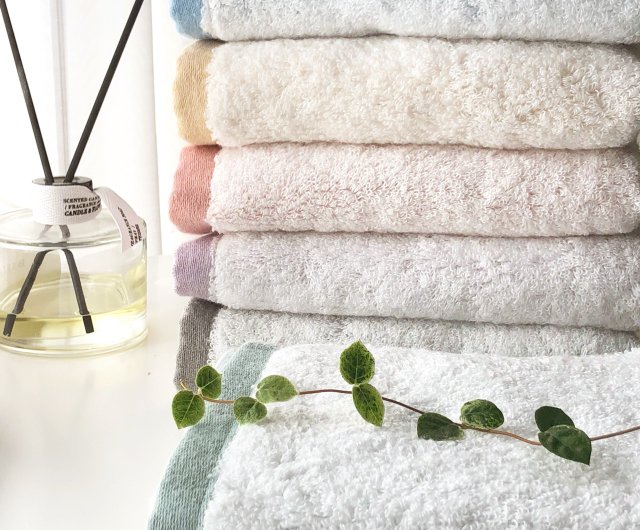
Premium cotton terry loops designed for superior softness, durability, and maximum absorbency
Organic Cotton Yarn
As sustainability becomes increasingly important in global markets, organic cotton yarn has gained attention. Grown without synthetic pesticides or chemical fertilizers, organic cotton supports environmentally responsible production practices.
From a performance standpoint, organic cotton towels can offer similar softness and absorbency to conventional cotton, depending on fiber quality. For brands targeting eco-conscious consumers, this yarn type provides both functional and ethical value.
Blended Yarns: Cotton with Bamboo, Modal, or Polyester
In some cases, manufacturers combine cotton with other fibers to enhance specific characteristics. For example, cotton blended with bamboo can improve softness and natural antibacterial properties. Cotton-modal blends create a silkier texture, while cotton-polyester blends increase durability and reduce drying time.
Blended yarns are often used in sports towels, travel towels, or high-rotation environments where quick drying and structural stability are priorities.
Why Yarn is important in Towel Sourcing
For trading companies and sourcing professionals, selecting the right towel yarn is not just about softness. It is about aligning material performance with market expectations, price positioning, and long-term usability.
A well-chosen yarn ensures that the towel maintains absorbency, resists wear, and performs consistently after repeated washing. Whether sourcing for retail, hospitality, or export markets, understanding yarn composition allows for smarter, more reliable decisions.
Final Thoughts
The quality of a towel begins long before it reaches the shelf. It starts with the yarn. From ring-spun and combed cotton to long-staple luxury fibers and functional blends, each yarn type serves a specific purpose.
By understanding these differences, buyers and suppliers can better evaluate towel quality, optimize sourcing strategies, and deliver products that meet real-world expectations